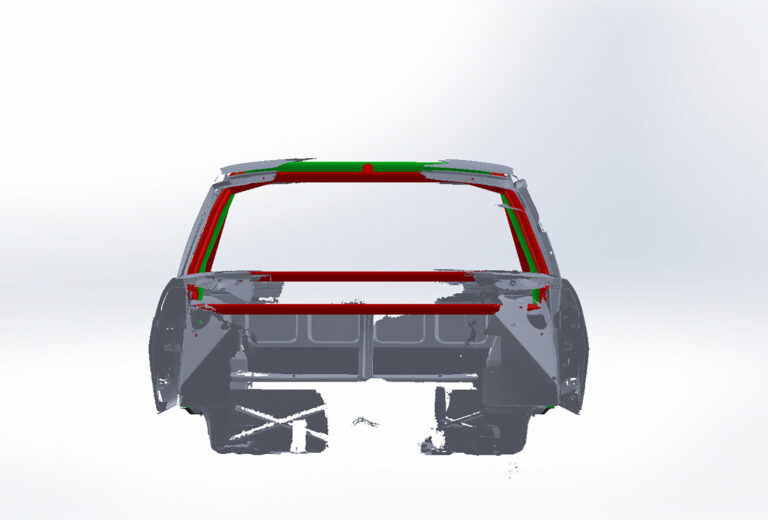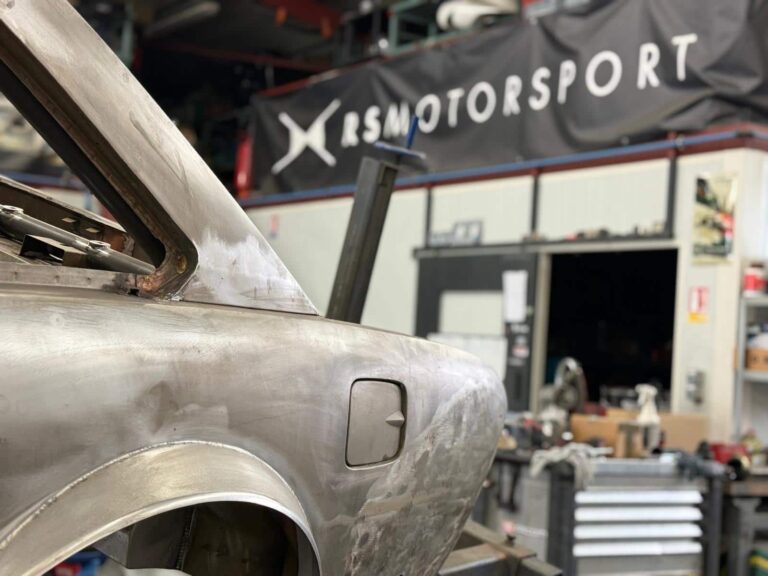

Long reserved for racing prototypes and supercars, carbon fiber has gradually established itself in the world of Restomod.
Its use is no longer driven solely by aesthetics or trends; it addresses genuine engineering requirements.
Carbon Fiber in Restomods: Heritage, Performance, and Engineering Necessity
Restomod is far more than a simple automotive restoration. It is a delicate balance between preserving a vehicle’s heritage and integrating modern technologies. The goal is not only to bring a classic car back to life, but also to make it more capable, more reliable, safer, and more enjoyable to drive every day.
One of the most effective ways to achieve this is through the use of carbon fiber. Long reserved for Formula 1, racing prototypes, and supercars, it has gradually become a key material in the world of restomods. Its adoption is not driven solely by aesthetics or trends; it addresses genuine engineering requirements.
As performance is a fundamental aspect of every restomod and safety remains a major priority, carbon fiber provides a modern solution to longstanding engineering challenges. Its benefits extend far beyond weight reduction: it improves vehicle dynamics, manufacturing quality, component durability, and even shapes the very philosophy of the restomod itself.
© Duboyong, CC BY-SA 4.0, via Wikimedia Commons
Restomod: Modernizing Without Compromising Heritage
The essence of a restomod is built around a simple idea: preserving the soul of a classic car while eliminating the shortcomings of its era.
Vehicles from the 1960s, 1970s, and 1980s possess undeniable charm—the Peugeot 504 is no exception—but they often suffer from several limitations:
- significant weight;
- less rigid chassis structures;
- limited braking performance;
- suboptimal aerodynamics;
- aging materials.
Preserving a vehicle’s iconic design while achieving driving dynamics comparable to those of a modern sports car is no easy task. To accomplish this, reducing weight becomes a priority, as does increasing structural rigidity. This is precisely where carbon fiber proves its value.
Weight: The Enemy of Performance
For decades, automotive engineers have pursued the same objective: reducing mass, a fundamental requirement in the pursuit of performance. A lighter vehicle offers numerous advantages:
- improved acceleration;
- shorter braking distances;
- lower fuel consumption;
- more precise steering;
- reduced tire wear;
- lower mechanical stress on components.
Contrary to popular belief, simply increasing engine power is not enough to improve performance. Removing 100 kilograms often delivers a more noticeable improvement than adding 30 horsepower.
Carbon fiber makes it possible to achieve this objective without fundamentally altering the vehicle’s structure. A steel hood, for example, can be replaced with a carbon fiber equivalent weighing more than 60% less. The same principle applies to fenders, the trunk lid, doors, dashboards, seats, interior panels, and aerodynamic components.
Every lightweight component contributes to improving the vehicle’s overall performance and driving dynamics.
Exceptional Structural Rigidity
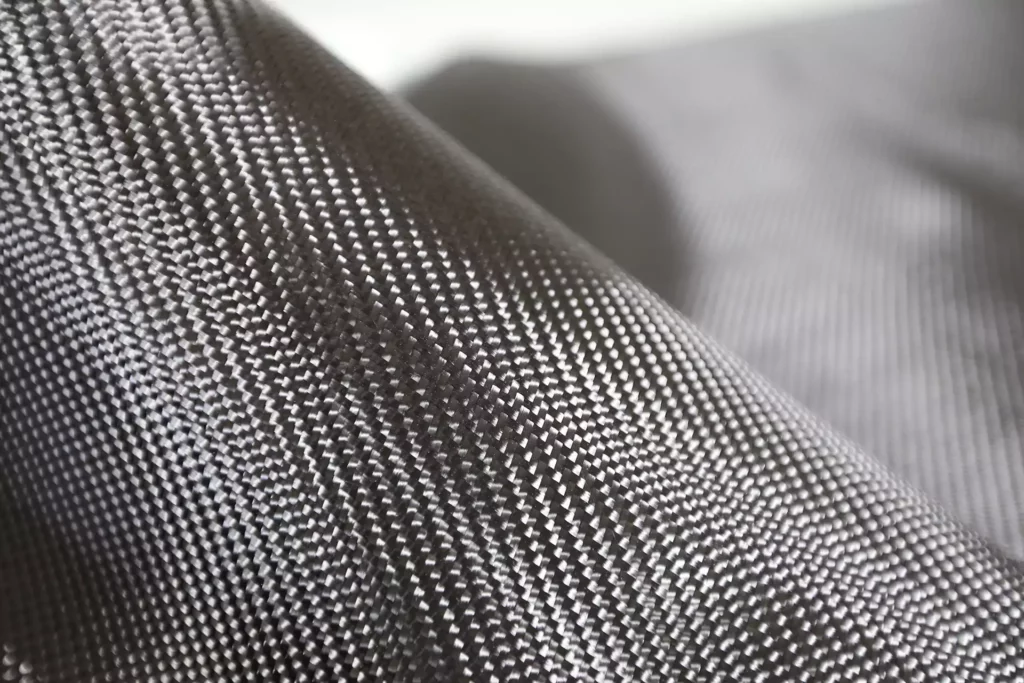
Carbon fiber is not only exceptionally lightweight; it also offers an outstanding strength-to-weight ratio and exceptional structural rigidity.
In the world of restomods, this characteristic is essential. Classic cars were never engineered to accommodate modern powertrains producing two or even three times their original output.
The resulting mechanical loads become significantly greater, and carbon fiber allows critical areas of the vehicle to be reinforced without adding unnecessary weight, ultimately enhancing both chassis performance and driving dynamics.
Enhanced Safety
Modern composites also offer an excellent level of safety when they are properly designed. Today, manufacturing processes make it possible to precisely control areas of rigidity and areas designed for deformation, allowing carbon components to be used in the right places.
In a restomod, this can contribute to:
- protecting certain mechanical components;
- improving the rigidity of the central cell;
- reducing vibrations;
- limiting unwanted deformations.
Even though the main structure often remains made of steel, as in our Projet-A 504, composite parts contribute to improving the vehicle’s overall behaviour.
Greater design flexibility...
…And reproducibility, another advantage of carbon fibre. Some parts are now impossible to find on classic cars and require complex, costly, and time-consuming work if they are to be restored or recreated, even in a modified form.
Composite materials, including carbon fibre, make it possible, within the scope of a limited production run, to achieve greater consistency. This characteristic is particularly valuable in the world of restomods.
Carbon fibre makes it possible to manufacture a wide range of components, such as bespoke dashboards, unique centre consoles, widened fenders, diffusers, air intakes, custom wheel arches, and perfectly integrated aerodynamic elements.
It therefore allows designers to push the boundaries of design while preserving the vehicle’s original historical lines and core identity.
An artisanal production approach aligned with restomod philosophy

© CC BY-SA 4.0, via Wikimedia Commons
Unlike mass-produced automotive manufacturing, restomods rely heavily on craftsmanship and artisanal expertise. Components, as well as entire vehicles, are often built individually or in very limited quantities. Carbon fibre fits perfectly into this approach.
Moulds can be specifically developed for each project, allowing complete control over the manufacturing process, both aesthetically and functionally. The layers of composite fabric are manually positioned, making it possible to precisely control fibre orientation according to mechanical requirements or visual considerations for visible carbon components.
The curing process is carefully controlled to achieve perfectly homogeneous parts, turning each component into an almost unique work of art:
This craftsmanship dimension perfectly reflects the spirit of high-end restomods.
Is carbon fibre the future of restomod engineering?

© CC BY-SA 4.0, via Wikimedia Commons
The future of restomods is set to become more technologically advanced than ever. Advances in manufacturing processes, the growing accessibility of composite materials, and the emergence of recycled or bio-based fibres are making carbon fibre increasingly available.
The next generations of projects will likely integrate hybrid materials, combining carbon fibre, aluminium, 3D printing, and new-generation composites to optimise each component according to its specific function. This approach will make it possible to design vehicles that are lighter, more efficient, and more sustainable, while controlling costs and reducing environmental impact. This is also one of the ambitions and the philosophy behind our project at Allure Provence Automotive.
In this evolution, carbon fibre will not replace all materials, but it will remain a strategic element. When used intelligently, it helps preserve a vehicle’s authenticity while providing the dynamic qualities expected from a modern automobile.
Summary: the key benefits of carbon fibre
- Weight reduction : reduces vehicle weight to improve performance.
- Rigidity : reinforces the structure without adding significant mass.
- Performance : optimises acceleration, braking, and handling.
- Design freedom : enables the creation of complex and bespoke components.
- Durability : offers resistance to corrosion, fatigue, and ageing.
- Aesthetics : provides a modern, high-end finish.
- Innovation : facilitates the integration of modern technologies while preserving the vehicle’s character.
Carbon fibre has become an essential material in the restomod world thanks to its technical advantages. Its low weight, high rigidity, and design flexibility make it possible to improve performance, driving dynamics, and the integration of modern technologies, while preserving the spirit of classic vehicles.
When used intelligently, it does not systematically replace steel or aluminium, but provides real added value where performance, safety, and reliability requirements demand it. More than just a material, carbon fibre embodies the combination of heritage and innovation, giving automotive icons of the past the ability to meet today’s automotive standards.